An important question every business should be asking themselves is “What motivates a person to purchase our brand?” Motivation refers to why a person acts or behaves in a particular way (3). It is what drives people’s willingness or desire to purchase a product or service.
Abraham Maslow proposed a theory of motivation based on a five-tier model of human needs, often depicted as hierarchical levels within a pyramid (1). The model was created to demonstrate that motivation is a means of satisfying human needs (1).
The needs are:
- Physiological
- Safety
- Love and belongingness needs
- Esteem needs
- Self-actualisation needs
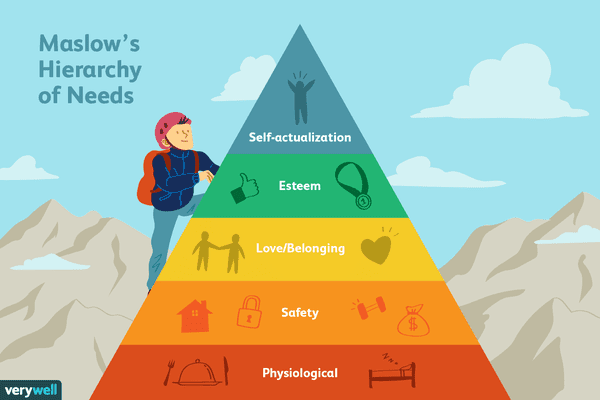
Illustration by Joshua Seong 2018
Motivation is a primary driver of a consumers purchase decisions. The process of motivation begins with recognising a need. For example, realising you are hungry. According to Maslow’s hierarchy of needs, hunger comes under the physiological tier. As food is part of an individual’s basic needs, when a person recognises they are hungry it causes an inherent tension or discomfort. The motivation to fulfill this need will become stronger the longer the duration they are denied.
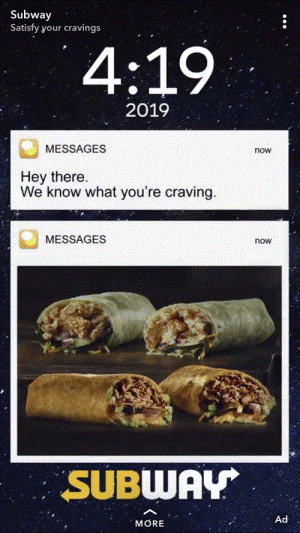
Using the same example of hunger, it may be due to a specific period in the day, such as lunch time. A person would begin to evaluate their lunch options and may be highly susceptible to advertising in helping them come to a satisfactory purchasing decision. Marketers can use this to their advantage by developing marketing communications which aim to convey a functional or emotional value proposition that aligns with the need consumers identify that your brand satisfies.
A recent study found that motivations for purchasing from fast food restaurants were (2):
- Speed and convenience (77%)
- Flavour (64%)
- Quality of ingredients and value for money (61%)
Based on this information from this study, Subway could use an emotional value proposition approach by highlighting that they have healthy alternatives compared to other fast food restaurants, and that their subs are good tasting and only use fresh ingredients. Alternatively, they could adopt a functional approach by conveying to the audience that purchasing food from Subway is a fast and convenient option which would leave customers fuller for longer.
They have conveyed to the audience that their subs are fresh and healthy.
Resources Used
(1) Cherry, K 2018 ‘The Five Levels of Maslow’s Hierarchy’ viewed 5th May https://www.verywellmind.com/what-is-maslows-hierarchy-of-needs-4136760
(2) McEachern, M and Schröder, M 2005 ‘Fast foods and ethical consumer value: a focus on McDonald’s and KFC’, British Food Journal, Vol. 107 Issue: 4, pp.212-224, <https://doi.org/10.1108/00070700510589503>
(3) Solomon, R, Russel;-Bennett, R & Previte, J 2019 ‘Consumer Behaviour: Buying, Having, Being’, Pearson Australian Edition, 4th Edition

 Celina's MARK217 Blog
Awesome blog Celina!
The way you discussed motivation really encapsulated what the concept is about. Emphasising the importance of “what motivates a person to purchase a brand?” allowed myself as a reader to really consider what factors influence our decision as consumers; as we are surrounded by so much “choice.”
Additionally, the exploration of Maslow’s theory allowed the idea of motivation to be crystallised in your discussion of what motivates consumers. Using this theory, I enjoyed your demonstration of Maslow’s perception towards motivation being a means of satisfying human needs. The detailed explanation of Maslow’s hierarchy of needs being a concept that identifies consumers to fulfil the lower needs first before moving up; evoked a deeper insight on “motivation” and provided an effective representation of what motivates consumers when making a decision.
Using fast food was a perfect example that I could completely relate to. The decision of choosing what to eat is one of the biggest struggles I experience every day. Do I want something fast? Do I want to eat healthy? How much money do I want to spend? (actually more like “how much do I have in my bank account”?). The article “11 reasons for fast foods” is a great read that explore consumer motivations.
Here is the link: https://www.webmd.com/food-recipes/news/20081202/top-11-reasons-for-fast-foods-popularity
The use of statistics further encompassed the idea of “motivation” and was surprising to me that over 60% of consumers were influenced by the quality of ingredients. These statistics allowed your suggestion for Subway to use this emotional value through emphasising the company’s desire in using fresh ingredients that are fast, convenient and affordable to be an effective marketing technique that the company could adopt through various channels.
Overall, I thoroughly enjoyed your perception on motivation and your explanation of Maslow’s theory to still hold relevance in today’s society. Also you influenced my decision to order Subway for lunch today.
LikeLike