F45 is the latest workout trend which has become extremely popular around the nation – and yes, I’ll admit I have been swept up into the “cult” of group training. Unfortunately, I learnt the hard way that old runners just won’t cut it for this style of training. A few months after joining F45 I began to suffer from minor foot related injuries due to poor footwear choice during training. It was recommended that I should seek new shoes which would better be suited for the high intensity sessions they offer at F45.
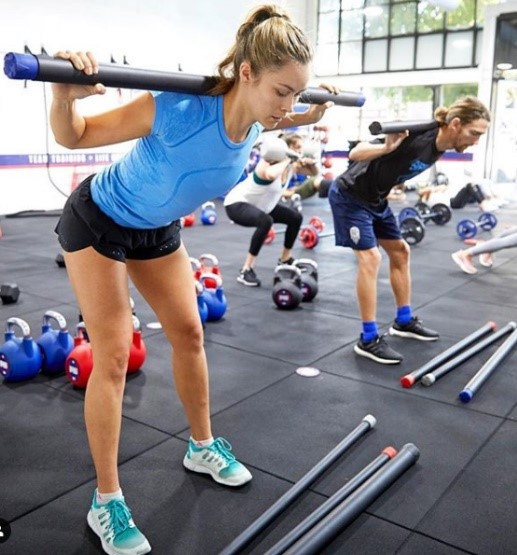
Choosing a new pair of training shoes became an extended problem-solving decision for me (1). I was in a situation where I lacked experience in this specific consumption setting. I had not invested in new joggers for a few years so was unaware of the range brands offered and what would best suit my needs. Research was required to help me come to a decision.
I began my decision-making process by establishing specific criteria I needed from my training shoes; they had to be flexible, lightweight, durable, and have good heel cushioning and support.
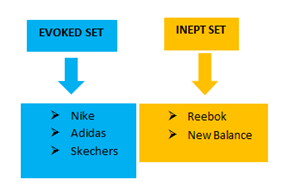
Based on previous buying experience I had already established a preference for brands. However, I backed my prior knowledge up by seeking information from trusted sources. Word of mouth communication is an important source of consumer information, as it forms the basis of attitudes and determine the relevance (2). My trusted sources were the trainers and other people who attended F45. I asked their opinion on what shoes they recommended and also read product reviews. This information helped me to arrange my evoked set of brands compared to my inept set of brands.
A person’s evoked set of brands are the specific brands a consumer considers when making a purchase in a particular category (3). Whereas a consumers inept set refers to the brands that a consumer excludes from their purchase consideration (3).
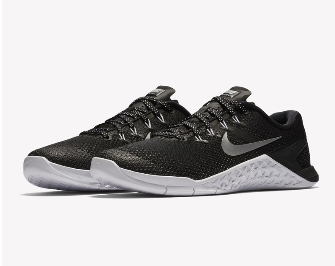
Only recently, I had gone and visited stores which stocked the brands of shoes in my evoked set list. During my visit I spoke to sales assistants to gain a more professional insight into what shoes in their range matched my pre-established criteria. Upon this, I then weighed all my options based on other variables such as price, as I did have a budget in mind, and the appearance of the shoe. In the end I ended up choosing training shoes from Nike (as pictured), this shoe inparticular aligned with my most important attributes the best. Post-purchase I am very satisfied with my choice!
Resources Used:
(1) Dudovskiy J 2012 ‘Four Modes of Consumer Decision Making’ viewed 20th March https://research-methodology.net/four-modes-of-consumer-decision-making/
(2) Grewal, R Cline, T and Davies, A 2003, ‘Early-Entrant Advantage, Word-of-Mouth Communication, Brand Similarity, and the Consumer Decision-Making Process’,
Journal of Consumer Psychology, Vol. 3 No. 3 pp. 187-197
(3) Solomon, Michael., Russell-Bennett, R. and Previte, J 2019, Consumer Behaviour, Australian Edition, 4th Ed, Pearson.
 Celina's MARK217 Blog