Consumer learning refers to the process whereby individuals acquire the purchase and consumption experience they apply to future related behaviour (4). It is considered that learning is the base of perception and is what motivates the consumers to buy a product or service (3). It is essential that marketers have a knowledge of learning theories so they can use this to structure communications that assist consumers in learning relevant facts and feelings about their product and brand. There are two main theories which aim to explain how individuals learn:
- Behavioural Theory
- Cognitive Theory
This blog will focus on how Subway uses behavioural learning theories to influence their customer’s behaviour. Behavioural learning theories are a set of theories that assume that learning takes place as the result of responses to external events (4). This view is represented by two major approaches; classical conditioning and instrumental conditioning.
Classical conditioning is a learning process where a stimulus is paired with another stimulus and the response transfers to the new stimulus (4).
A marketer may decide to use a brand ambassador to get consumers to associate their product with a particular celebrity they may be fond of. When a consumer watches an advertisement, especially one featuring a celebrity, there is an increased urge to have that product. People tend to buy the endorsed products to emulate that Celebrity they may be fond of.
Celebrities are generally more efficient at attracting attention in a world where consumers are overloaded with messages from marketers. A Taiwanese study shows that consumers show greater recall of products which have been endorsed by celebrities (2). This is as the human brain recognises celebrities similar to how it recognises people we actually know (2). When people see that celebrity they tend to link them to their connection with the brand which could simultaneously create a desire to buy the product. Researchers also found that 85% of people said that celebrity ambassadors enhanced their confidence in and preference for a product (2).
He is shown expressing his amazement that Subway sandwiches are only five dollars.
Subway commonly uses athletes as their brand ambassadors as they closely align with the brands values of living a healthy lifestyle. In the video above, they have used Michael Phelps, an Olympic swimmer, as he is easily recognizable. When people see him they link him to his connection with Subway which could simultaneously create a desire to consume their food.
Instrumental conditioning is a learning process through which the strength of a behaviour is modified by reinforcement or punishment (4). The consumer learns to perform behaviours that produce positive outcomes and to avoid those that yield negative outcomes (4).
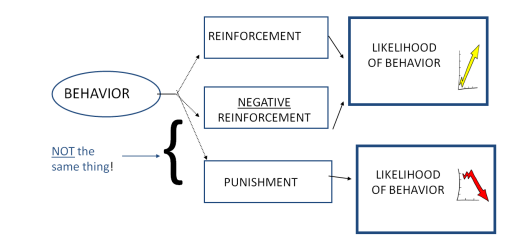
techniques on consumer behaviour.
Positive reinforcement is the process whereby rewards provided by the environment strengthen responses to stimuli and appropriate behaviour is learned (5).
One positive reinforcement strategy which Subway has adopted is offering free deals and coupons. People often like to try products out before they commit themselves fully (3). By offering free deals or coupons this allows the customer to be introduced to the products, expand shoppers knowledge about the brands product and most importantly foster relationships and inspire loyalty.
For a brand it can be your first step in creating an emotional connection between your brand and the customer. This connection is at the core of developing loyalty towards your brand. If you’re giving them something at a discount or for free it tends to make them feel like you’re doing them a favour. A positive experience increases the likelihood of behaviour therefor generally leads to future purchases from the customer (1).
Consumers use the coupons to buy a product at a discount, if they had a positive experience the first time generally they then continue to buy the product even if the coupons are no longer available as the consumer has become conditioned to buying the product (3).
A recent survey found that 57% of shoppers are motivated to complete a first time purchase when they are able to redeem a coupon (5). It also revealed that 91% of buyers who redeem coupons say that they would visit the same retailer again (5). These statistics highlight that when people are rewarded for buying a product the reward is effective in reinforcing the behaviour.
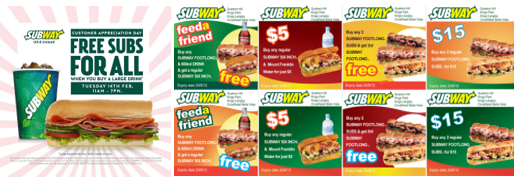
The consumers are rewarded for their purchase.
Can you think of any examples in your own life where marketers may have used positive reinforcement?
Hint – using your loyalty card at Michel’s Patisserie to get that 10th coffee free #guilty
Resources Used:
(1) Cherr, K 2018 Instrumental Conditioning in Psychology, viewed 4th April https://www.verywellmind.com/what-is-instrumental-conditioning-2795408
(2) Guided Selling, 2016 ‘Impact of Celebrity Endorsement on Consumer Buying Behaviour’ viewed April 28th https://www.guided-selling.org/impact-of-celebrity-endorsement-on-consumer-buying-behavior/
(3) Puiu, C 2008, ‘Marketing Applications of the Learning Process’ Annals of the University of Oradea, Economic Science Series, vol. 17 Issue 4, pp. 1140-1142
(4) Solomon, Michael., Russell-Bennett, R. and Previte, J 2019, Consumer Behaviour, Australian Edition, 4th Ed, Pearson
(5) Wong, D 2015 ‘What Science Says About Discounts, Promotions and Free Offers‘ viewed April 28th https://conversio.com/academy/what-science-says-about-discounts-promotions-and-free-offers/
 Celina's MARK217 Blog